Mattress Buying Guide
Dunlop Latex: How Density and Feel Shape Your Choice
“Dunlop latex” identifies a material and a way of making it. It does not, by itself, tell you whether a mattress will feel plush or firm, give way easily or push back, or suit the way you sleep. To compare natural latex and organic mattresses with confidence, look beyond the label: examine firmness, layer thickness, construction, and how the mattress is meant to fit your body and preferences.
Published November 20, 2026
The name is a starting point, not a comfort rating
Latex has a reputation for buoyancy: it can compress under pressure and respond as you move, rather than slowly enveloping you. That broad description is useful, but it is not a promise that every latex mattress feels the same. Two beds may both use Dunlop latex and still differ substantially in surface softness, support, temperature, and how readily they accommodate a sleeper’s shape.
The reason is simple. A mattress is not a single material in isolation. Its feel emerges from the combination of the latex formulation and density, the thickness and position of each layer, the cover and any comfort materials, the foundation beneath it, and the person lying on it. A firm latex layer at the base may provide a stable core; a softer layer above it can make the surface easier to settle into. Change the order or thickness, and the result changes.
That is why broad claims such as “natural,” “organic,” or “Dunlop” should be treated as descriptions of materials or process—not as substitutes for comfort specifications. Certifications may help clarify what a product claims about its materials and production. They do not tell you whether a particular firmness will feel right to you.
For mattress shoppers, the practical question is not whether Dunlop latex is universally better or firmer. It is how a specific mattress is built, what options are available, and whether those details match your needs.
What “density” can—and cannot—tell you
Density describes how much material occupies a given volume. In latex, it is one useful construction detail, but it should not be read as a direct synonym for firmness. A denser foam may have a particular weight and structure, yet the sensation a sleeper experiences depends on more than density alone. Formulation, manufacturing choices, layer dimensions, and the mattress as a whole all matter.
Firmness is usually communicated through a manufacturer’s options or scale, such as soft, medium, or firm. Those terms are not perfectly standardized across brands. “Medium” on one mattress may not match “medium” on another, and a numerical score can be just as brand-specific. Density and firmness therefore answer different questions: density concerns the material’s mass per volume; firmness describes a response or sensation, often in terms that vary by maker.
When specifications list a density figure, ask what the number refers to: the latex itself, a particular layer, or another component. Also ask whether the figure is measured and reported consistently across the models you are comparing. If a seller provides no density data, you can still make a considered comparison by looking at the stated firmness, layer thickness, and construction, and by asking for clarification rather than guessing from the word “Dunlop.”
Density may be relevant to durability and performance discussions, but no single figure guarantees how long a mattress will last. Wear depends on the complete design, the quality and amount of material, use, care, and the support system underneath. A confident buying decision comes from reading the details together, not treating one specification as a shortcut.
- Density describes material mass relative to volume.
- Firmness describes how a surface feels under pressure, using a scale that may differ by brand.
- Resilience refers broadly to how material responds and recovers when pressure is released.
- Support describes how the mattress works as a whole to hold the sleeper, not simply how hard its surface feels.
Why layer thickness changes the experience
Even when latex layers share the same general material description, their thickness and placement affect how the mattress responds. A thicker comfort layer gives the body more material to compress before it meets firmer layers beneath. A thinner one may create a quicker transition into the support core. Neither arrangement is automatically correct; each expresses a different balance between surface give and underlying resistance.
Consider a mattress made of several latex layers. The top layer has the first opportunity to ease pressure at the surface. Lower layers contribute to the mattress’s overall support and determine how the bed responds as more weight is applied. If the top is too firm for a sleeper’s preference, the surface may feel unyielding. If the upper layers compress too readily for that sleeper, the mattress may feel less supportive than expected. The effect is individual, and it depends on the combination of body shape, sleep position, and construction.
Layer order matters as well. Some mattresses allow layers to be rearranged, exchanged, or selected at different firmness levels. That flexibility can make specifications especially important: a model name alone may describe a platform with multiple possible configurations rather than one fixed feel. Ask which firmness is included in each layer, whether options differ by size, and whether the layers can be changed after purchase.
Height is not a reliable proxy for softness. A taller mattress may simply contain more layers or a thicker support core; it does not necessarily have a plush surface. Likewise, a mattress with a thin profile is not automatically firm. The best comparison describes the individual layers and their roles, not only the overall number of inches.
Begin with the feel you want
Before comparing products, describe your preferred feel in ordinary language. Do you want to settle close to the surface, or remain more on top of it? Do you prefer a gently yielding first impression, or a more immediate sense of resistance? These questions are not technical, but they give firmness labels context.
Then consider your usual sleep position. Side sleepers often look for enough give around the shoulder and hip to make the surface comfortable, while still wanting the mattress to feel stable overall. Back sleepers may prioritize a balanced surface that does not feel excessively soft or rigid. Stomach sleepers commonly want to pay close attention to how much the upper layers yield. These are starting points, not rules: body proportions, personal preference, and how often someone changes positions all influence what feels comfortable.
If two people share a bed, compare their preferences separately. A couple may not agree on firmness, even if they have the same mattress size. Some mattresses offer different firmness on each side in selected sizes; others use a single feel throughout. The availability of split firmness, and the exact configurations it permits, should be confirmed before purchase rather than assumed.
Keep the language precise when seeking advice. “I want a soft mattress” is a beginning. “I prefer noticeable cushioning at the shoulder but do not want a deep, slow-sinking feel” gives a clearer picture of the experience you are trying to find. Neither description predicts the outcome perfectly, but specificity makes comparisons more useful.
Natural and organic are material claims, not feel claims
Shoppers often begin with a preference for natural latex or organic mattresses. Those terms can matter to buyers who are researching ingredients, certifications, or sourcing. They do not establish a standard firmness, nor do they guarantee a particular degree of bounce, softness, or support. Two products with similar material claims may have different designs and feel markedly different.
Read the description at the component level. Identify which layers contain latex, what other materials appear in the mattress, and whether the manufacturer specifies the latex type and layer firmness. If a mattress is described as organic, check what the relevant certification covers and which components it applies to. A certification is most useful when its scope is clear; an unqualified headline can leave important details unanswered.
For example, a mattress may combine Dunlop latex with cotton and wool, or pair latex with coils. Such combinations can alter the structure and feel, so the phrase “latex mattress” does not mean every part of the bed is latex. A hybrid construction has its own support system and should be evaluated as a whole. The question is not only what materials are present, but where they are placed and what each component contributes.
Material preferences are personal. Some shoppers place high importance on particular certifications or avoiding specific components; others put more weight on an adjustable configuration, a trial or exchange policy, or a budget. A useful comparison makes those priorities explicit without suggesting that one set of materials guarantees better sleep for everyone.
Compare construction, not just brand language
Product pages are written to make a bed sound appealing. That is expected, but phrases like “cloud-like,” “responsive,” or “ultimate support” can be difficult to compare. Translate them into checkable questions. What is the firmness of each layer? How thick is it? Is the mattress all latex or a hybrid? Can its layers be rearranged or exchanged? What foundation does the maker recommend?
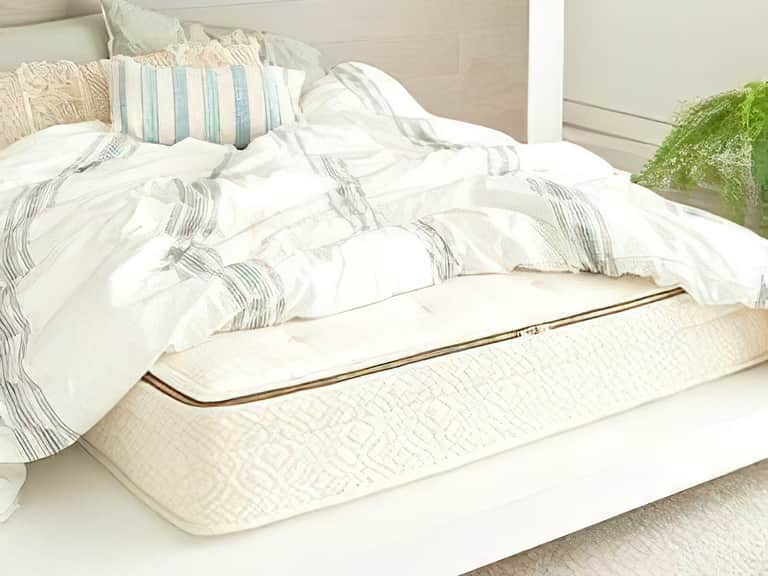
A layered model such as the Savvy Rest Unity Pillowtop Latex Mattress illustrates why configuration details matter. It is described as a 13-inch mattress combining a three-layer Serenity construction in Dunlop latex with a separate Harmony topper in Talalay latex. The product information lists layer choices of soft, medium, or firm and allows side-to-side customization in Queen and King sizes. That is a specific construction example, not evidence that one combination suits every sleeper. Buyers should confirm the configuration and available choices directly before ordering.
When reviewing any similar model, establish whether a “soft” or “firm” label refers to the complete mattress or an individual layer. Confirm whether the top layer is removable, whether it can be exchanged, and what conditions or time limits apply. Ask whether the cover can be removed and how it should be cared for. These details affect ownership as well as the initial feel.
Also check the foundation requirement. A mattress’s behavior can be affected by what supports it, and manufacturers may require a rigid, slatted, or otherwise approved base. Slat spacing, platform construction, and compatibility with an adjustable base are worth verifying. A mismatch can create practical problems and may also complicate warranty coverage.
A practical comparison checklist
Before deciding between natural latex mattresses, put the essential facts side by side. A simple comparison table can expose differences that a polished product description leaves buried.
- Latex details: Is the latex identified as Dunlop, Talalay, or a combination? Which layers contain it?
- Firmness: Are ratings provided for each layer, the whole mattress, or both? Are the terms defined?
- Layer dimensions: What is the thickness of each layer, and where is it positioned?
- Other materials: Does the bed include coils, wool, cotton, or another comfort layer?
- Customization: Can firmness be selected by layer or by side? Which sizes allow this?
- Adjustment policy: Can layers be exchanged after delivery? What fees, deadlines, and conditions apply?
- Fit and setup: What are the mattress dimensions and total height? What foundation is required?
- Care and cover: Is the cover removable? What cleaning methods are permitted?
- Warranty: What components and types of damage are covered, and what exclusions apply?
- Trial and delivery: How does the return or exchange process work, and who pays associated costs?
A seller who can answer these questions plainly is helping you assess fit. If the answers remain vague, treat that as an information gap—not as proof that a mattress is unsuitable, but as a reason to pause and ask again.
How to make sense of a firmness test
If you can try a mattress in person, give the test enough time to be informative. Lie in your usual position, then try another position if you move during the night. Notice whether the surface feels comfortable at the shoulder, hip, and other points that contact the bed. Pay attention to how easy it is to turn and whether the transition between the upper and lower layers feels abrupt or gradual.
Do not judge only by the first few seconds. A quick sit on the edge tells you something about edge feel, but little about the experience of sleeping on the surface. Spend several minutes lying down and allow your body to settle. If you share a bed, test the mattress together where possible, because motion and space can feel different when another person is present.
When an in-person test is unavailable, use the manufacturer’s descriptions cautiously and seek comparable details from multiple sources. Ask about return windows, exchange fees, shipping costs, and whether comfort adjustments are allowed. A policy that looks generous in a headline may include conditions that materially affect the decision.
Remember, a showroom impression and the feel at home may not be identical. The foundation, bedding, and time spent on the mattress can all shape the experience. A trial or exchange policy offers a way to evaluate the mattress in your own setting, but read its terms before relying on it.
Common assumptions worth questioning
“Dunlop always feels firmer.”
That statement turns a construction method into a universal comfort verdict. Firmness depends on the particular latex, the way it is made, and how it is used in the mattress. Compare actual firmness options and layer plans instead of relying on a generalization.
“Higher density automatically means a firmer mattress.”
Density and firmness are related considerations, not interchangeable terms. A density number alone does not reveal how the complete mattress will feel. Look for both material specifications and a clear account of the mattress’s firmness configuration.
“Organic means comfortable.”
Organic is a material and certification question. Comfort remains a question of personal fit and construction. A product can meet a shopper’s material priorities and still feel too firm, too yielding, or simply unlike what that person prefers.
“A thicker mattress is softer.”
Height describes the overall profile, not the sensation. A taller model may contain additional support layers, and a shorter one may still have a yielding comfort surface. Check the purpose and firmness of each component.
“A firm mattress must be supportive.”
Firmness is a surface sensation; support describes how the complete mattress holds the sleeper. A bed can feel firm without being the right match for an individual, just as a softer surface may still be part of a thoughtfully constructed mattress. Evaluate both ideas separately.
The decision is a matter of fit
Dunlop latex can be one part of a durable, responsive mattress, but the label cannot make the choice for you. Start with the feel you prefer and the positions you use. Then inspect the mattress’s layer thickness, firmness options, material composition, and support system. If density is listed, understand what it describes and consider it alongside—not in place of—the other specifications.
In the end, a good buying guide does not promise that a material will solve every comfort problem. It helps you ask better questions, compare like with like, and recognize what remains uncertain. With latex mattresses, that means moving from a single word—Dunlop—to the complete construction beneath the cover.
For a first-time buyer, that shift is empowering. You need not become a materials engineer to make a thoughtful choice. You do need clear information about how the mattress is built, what each layer is meant to do, and what options exist if the feel is not right. Density can inform the conversation. The construction, the configuration, and your own preferences finish it.
Quick takeaways
- Dunlop identifies a latex type and production method, not a standardized firmness.
- Density, firmness, resilience, and support describe different aspects of mattress performance.
- Layer thickness, order, and material combinations can substantially change a mattress’s feel.
- Sleep position and personal preference are useful starting points, not rigid rules.
- Compare specifications, adjustment policies, foundation requirements, and warranty terms before buying.